Showing posts with label SABR. Show all posts

June 30, 2013

Victoria baseball history

The history of baseball in Victoria, British Columbia has many interesting stories (as well as a statistical legacy). As Tom Hawthorn notes in this great overview of professional baseball in Victoria, on the surface the city seems much more like a cricket and rugby town.  But baseball goes back a long way, with a lot of colourful characters.

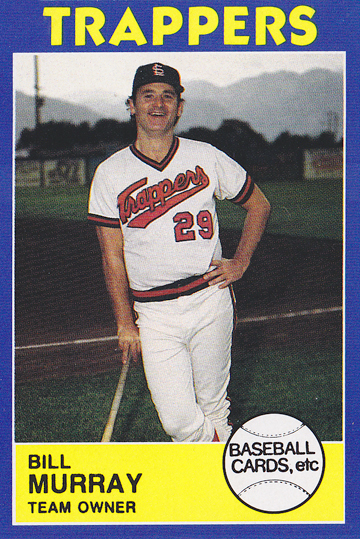
Hawthorn penned a similar piece for the Globe & Mail ten years ago, which contains more details about the single appearance of the subject of "the greatest baseball card ever made".

Bill Murray, Victoria Mussels infielder


-30-

February 23, 2013

Sabermetrics primer

Phil Birnbaum, author of the Sabermetric Research and the editor of SABR's "By the Numbers", has written a primer on the topic with the title "A Guide to Sabermetric Research" that appears at the SABR site. This should be the first stop for anyone who wants to find out more about the field of sabermetrics, and a good read for those already active.

-30-

April 23, 2012

Leadoff walks

It's well established that leadoff walks are no worse than leadoff singles.

The pre-eminent research is by David W. Smith (of  http://www.retrosheet.org/ fame), whose paper "Does Walking the Leadoff Batter Lead to Big Innings?" (published in SABR's The Baseball Research Journal in 2007 (#35, pp.23-24) answered the question with an emphatic "NO". Smith looked at game records from 1974 to 2002, and found that just under 40% of hitters who reach first base, regardless of method of getting there (single, walk, or hit-by-pitch) scored a run.

More recently, plen's "The Leadoff Walk" looked at a longer time frame (starting in 1952 and ending perhaps in 2009), and John Dewan wrote about "The Dread Leadoff Walk" (also here). Both found roughly the same thing as Smith. plen's assessment was a couple of percentage points lower than Smith's, reflecting the lower run scoring environments in the years on either side of Smith's analysis.

Miguel Cabrera
Miguel Cabrera. Taking a pitch doesn't make a dramatic photo.
Which brings us to today. "An in-depth look at the leadoff walk in 2011" was written by Guy Spurrier (at the National Post). Spurrier references Smith's work and then goes on to use baseball-reference.com data to give us a look at the season just passed. In addition to providing some nifty graphics, it also provides details about the best and worst players in this category.

Miguel Cabrera led the Majors in 2011 with 23 leadoff walks -- not a surprising result, given that he was third overall with 108 walks on the season, trailing only Jose Bautista (132) and Joey Votto (110).

 -30-

January 13, 2012

SABR Analytics Conference

The Society for American Baseball Research (SABR) has just announced that they will be hosting the first-ever conference dedicated to baseball analytics from March 15-17, 2012.

All of the "featured speakers" shown are team general managers and executives -- but I anticipate that as more speakers are announced there will be some number crunchers added to the list.

Hopefully there will be a conference procedings document produced for those of us who won't be able to attend.

-30-

November 7, 2011

The Bayes Ball Bookshelf, #2

Baseball Analyst, 1982-1989 (Bill James, publisher and editor)

SABR is now hosting -- the the blessing of Bill James, and through the work of Phil Birnbaum -- the complete Baseball Analyst.  Between 1982 and 1989, Bill James published 40 issues of Baseball Analyst, which in retrospect is now recognized as the launch pad for some fundamental thinking about using quantitative approaches to understand baseball.

The initial issue got off to a great start, with an article about fielding by Paul Schwarzenbart. In his introduction to the issue, James writes that the article "demonstrates that fielding statistics, like batting and pitching but apparently even more so, are the products in part of circumstances as well as men." This is a topic that, 30 years later, continues to provide plenty of fodder for analysis (e.g. this blog post from a month ago by Tangotiger, "Not all fielding opportunities are created the same").

In later issues, there are articles covering the usual parade of topics: clutch hitting, ballpark effects, how much young pitchers should work, ageing of ball players, and of course movie reviews.

There's also familiar names: Pete Palmer, Phil Birnbaum, and Bill James himself.

All in all, Baseball Analyst is an interesting time capsule. The tools the sabermetric community use to communicate have shifted -- when was the last time you subscribed to a magazine produced on a typewriter and mimeograph? But more importantly, it demonstrates how thinking about these topics has shifted. This shift is both because of further research (we know more than we used to) and because of the proliferation of data and cheap computing power

But it also shows that in spite of 30 years of analysis, there are still many questions unresolved.

-30-